TL;DR
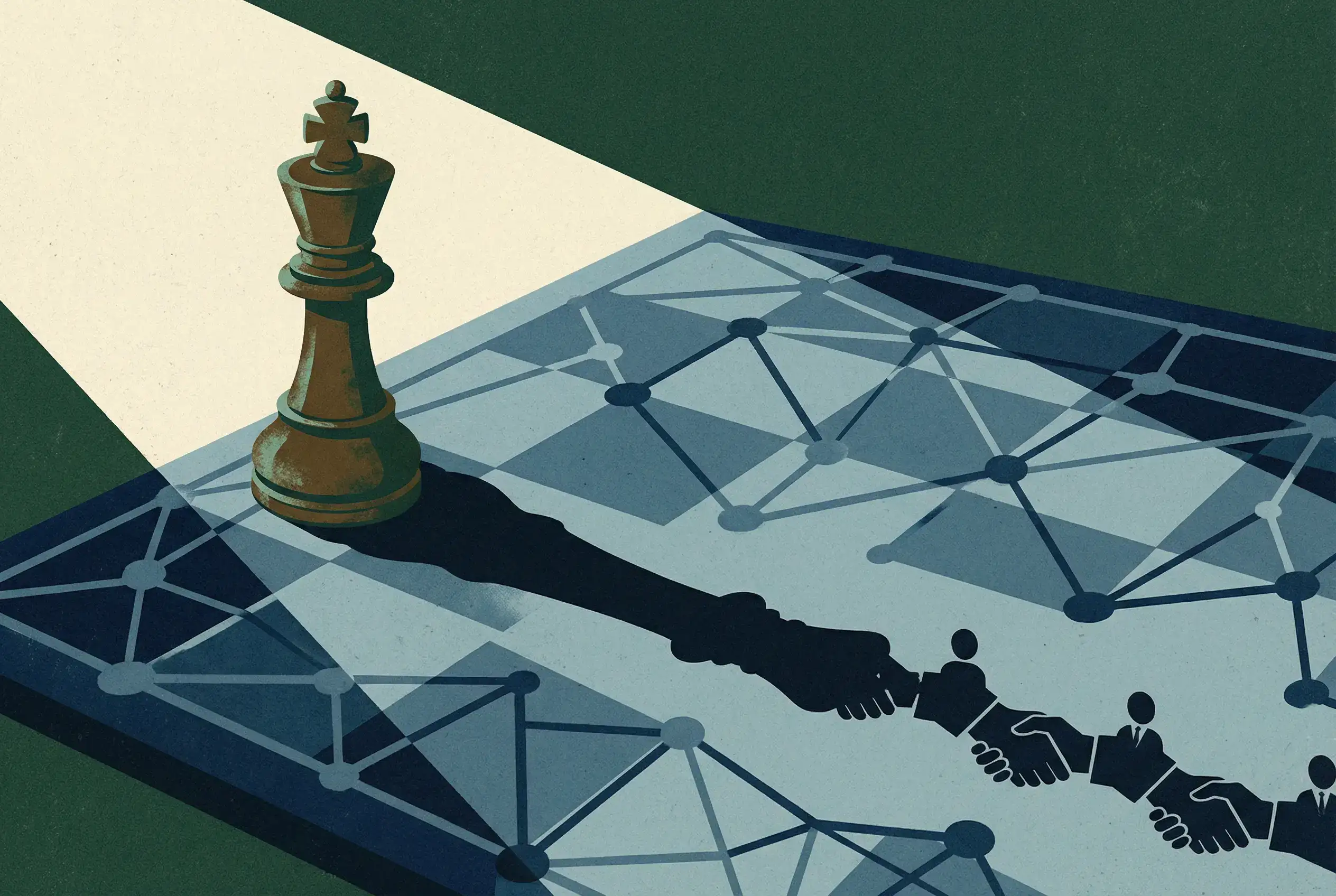
- 80% of buyers already have a preferred vendor before you make contact — LinkedIn is where that preference is formed, not where it's pitched
- 51% of social sellers exceed quota vs peers who don't use social media — the gap is real and growing
- 14.6% close rate on inbound leads vs 1.7% on cold outbound — the math is not close
- 82% of buyers check your LinkedIn profile before taking a meeting — your profile does sales work before you say a word
- Automated outreach produces 0.47% response rates — the same effort done personally produces 8%
- Carousels drive 24% engagement vs 4% for text — format matters as much as message
- Comments are a sales channel — strategic commenting drives 30%+ follow-up DM response rates
The 80% Problem: You're Already Behind
Here's the stat that should change how you think about LinkedIn for sales:
80% of B2B buyers already have a preferred vendor in mind by the time they engage with a seller. Not "leaning toward." Preferred. They've mentally selected someone, and you're competing against a default they already hold. (6sense 2024 B2B Buyer Experience Report)
It gets sharper: 92% of buyers start their journey with at least one specific vendor in mind. (Forrester State of Business Buying 2024)
And the buying journey? 67% of it happens without any seller involvement. Buyers research independently. They read content. They talk to peers. They form opinions. Then — and only then — they reach out or accept your outreach.
This is called the dark funnel. And it runs directly through LinkedIn.
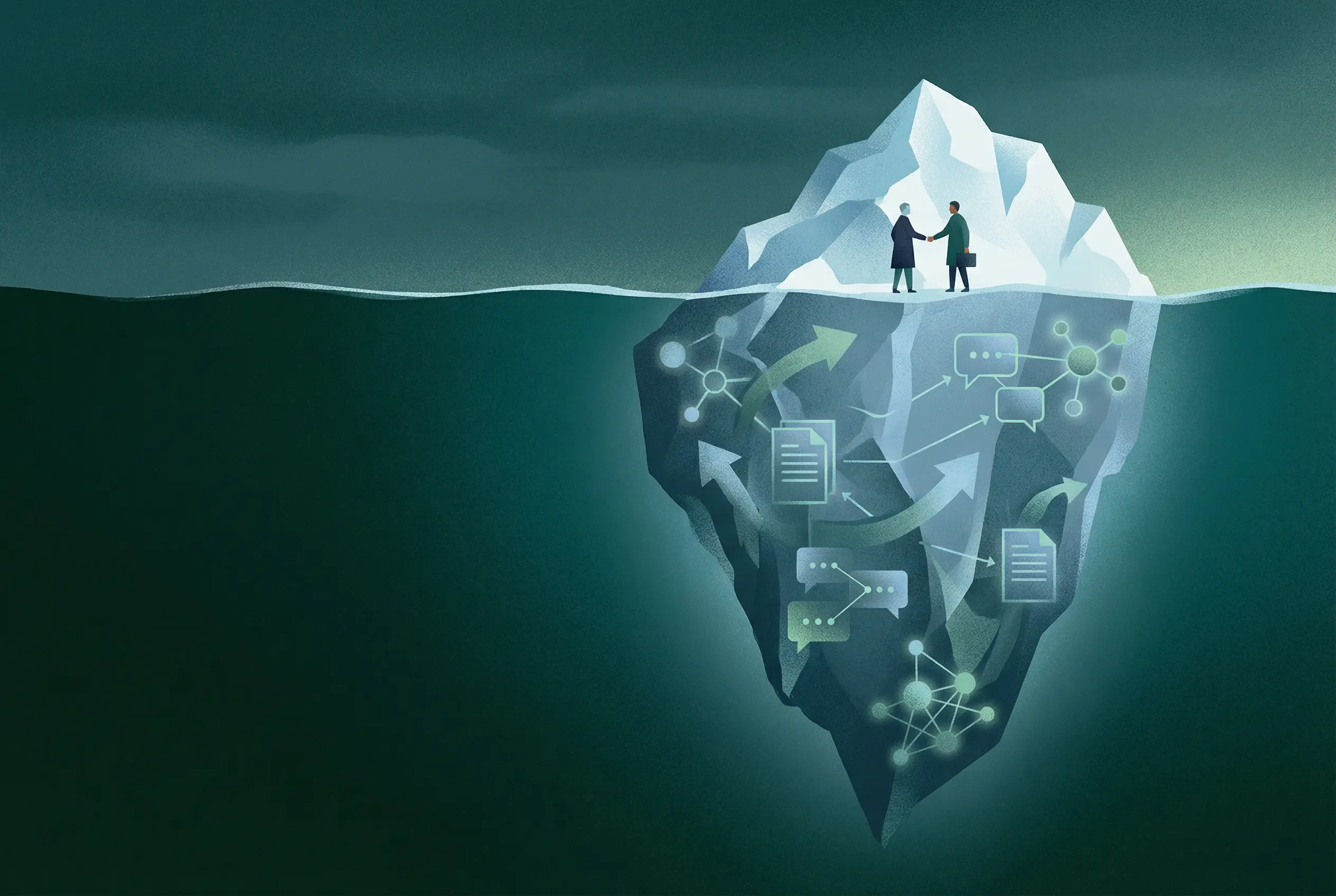
If you're only using LinkedIn for outreach, you're arriving late to a game that started months ago. The salespeople winning on LinkedIn aren't winning because of better pitch lines or higher InMail volume. They're winning because when the buyer finally starts researching, their name already comes up.
Key Takeaway: LinkedIn isn't a sales channel. It's a preference-formation channel. The sale happens in the feed, in the comments, in the content — months before anyone raises their hand.
Key Takeaway: LinkedIn isn't a sales channel. It's a preference-formation channel. The sale happens in the feed, in the comments, in the content — months before anyone raises their hand.
How Buyers Actually Use LinkedIn
Before you write a single outreach message, understand what your prospect is doing on the platform.
82% of B2B buyers check a seller's LinkedIn profile before taking a meeting. Not after. Before. Your profile is the first sales conversation you have — and you're not even in the room.
What are they looking for?
- Do you understand their industry?
- Have you posted about their type of problem?
- Do you seem credible or like another salesperson trying to hit quota?
- Are there mutual connections who might vouch for you?
- Does your content demonstrate expertise — or broadcast generic advice?
71% of buyers prefer independent research over talking to a sales rep. (Forrester) They're not avoiding you. They're gathering enough information to know whether talking to you is worth their time. Your LinkedIn presence is what that research looks like in practice.
A buyer might discover your product through an ad, a referral, or a conference. But they will validate their interest by looking you up. If your LinkedIn profile is sparse, your content is three months old, and you haven't posted anything relevant to their problem — you've failed the background check before the interview.
73% of decision-makers say thought leadership is more trustworthy than marketing materials for evaluating a company's capabilities. (Edelman-LinkedIn 2024) Your content is your credential.
Why Deep Sellers Beat Shallow Sellers
LinkedIn's research with Ipsos surveyed 2,000+ B2B sellers and 508 buyers. They found two distinct profiles:
Deep sellers build genuine relationships, use data to understand buyer context, and multi-thread through buying committees. Shallow sellers send volume outreach, rely on basic targeting, and focus on individual contacts.
| Metric | Deep Sellers | Shallow Sellers |
|---|---|---|
| Exceeded quota | 42% | 22% |
| Use sales intelligence | 4.1x more likely | Baseline |
| 7+ contacts per account | 49% | 18% |
| % of all sellers | 18% | 82% |
The gap isn't tools or territory. It's relationship depth and information quality. Deep sellers know more about their buyers before the first conversation.
88% of buyers say a seller demonstrating genuine understanding of their business needs increases the likelihood of purchase. (LinkedIn Deep Sales Playbook) This isn't a soft preference. Know your buyer's business. Show it.
Content Is Your Pre-Sale Conversation
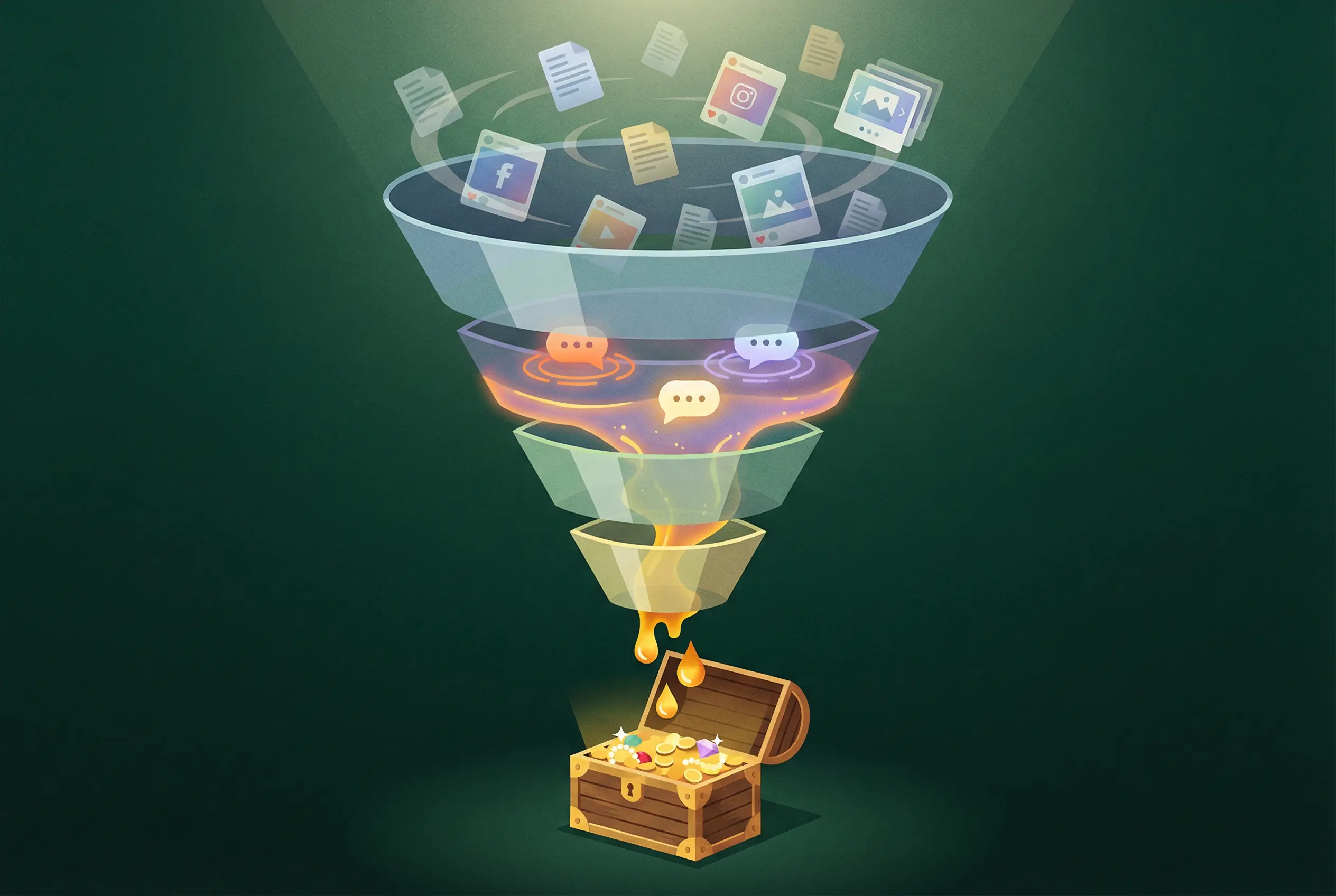
This is the core insight that separates LinkedIn sales from every other channel: your content runs while you sleep. It's building awareness, demonstrating expertise, and forming preferences — without you making a single call.
The data on thought leadership and pipeline is now unambiguous. From the 2024 Edelman-LinkedIn study (3,484 global executives surveyed):
- 75% of decision-makers researched a product they weren't previously considering after engaging with thought leadership
- 60% are willing to pay a premium to work with organizations that produce strong thought leadership
- 9 in 10 decision-makers become more receptive to outreach from companies that consistently publish content
- 53% say thought leadership directly influenced a purchasing decision
More than half of purchasing decisions are influenced by content — before the sales team ever enters the picture.
What Content Format Converts Best?
Based on Richard van der Blom's analysis of 1.8 million LinkedIn posts (Algorithm Insights 2025):
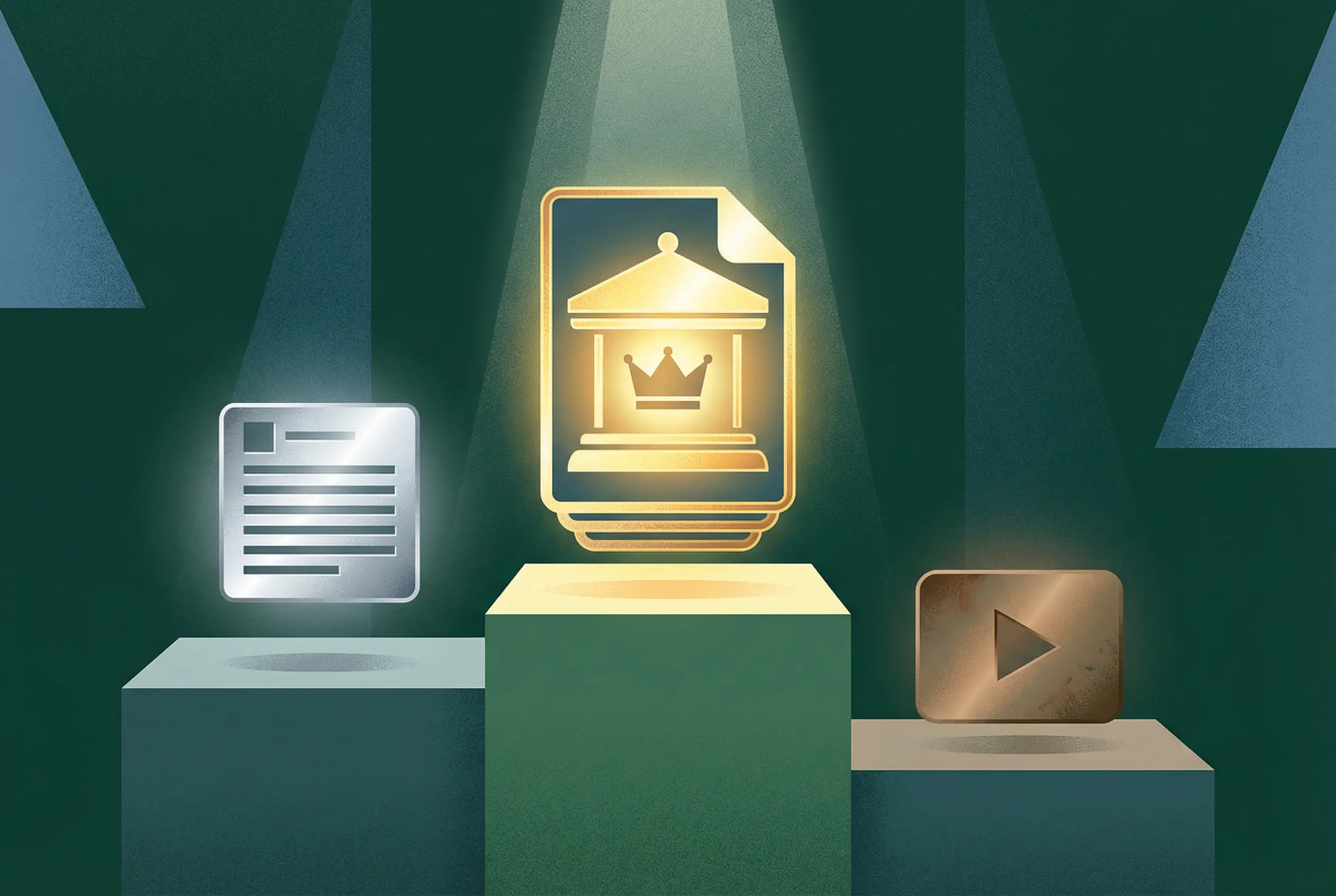
Carousels dominate. Not because they look good — because they're educational. Frameworks, step-by-step guides, data breakdowns, case studies. The formats that teach are the ones that build pipeline.
One counterintuitive finding: video reach dropped 300% in late 2025. The "post more video" advice is already outdated. Carousels and documents are where the ROI is now.
Case Study: Storylane — 50%+ Pipeline from LinkedIn
Storylane, a B2B SaaS company at $8M ARR, publicly credits LinkedIn for driving over 50% of their sales pipeline. Their 17 employees created 3.6 million views through consistent LinkedIn content. Their company page has mediocre stats — and they're fine with that. They deliberately decided it was one of the lowest-leverage opportunities and invested in individual people's content instead.
That's the model. Individual voices, consistent content, compounding pipeline. If you're building a personal brand on LinkedIn, you're already building the foundation for sales.
The Right Way to Do LinkedIn Outreach
Let's be direct: most LinkedIn outreach is terrible. And the data proves it.
One sales team running 75 automated messages per day achieved a 0.47% response rate. They switched to personal, hand-crafted messaging and hit 8% response rates — booking more meetings with dramatically lower volume.
Step 1: Warm Up Before You Reach Out
People are 3x more likely to respond to your outreach if you've had 4-5 prior interactions — comments on their posts, likes, profile views. This isn't manipulation. It's how human familiarity works. Strangers are ignored. Familiar names get opened.
Pre-engagement increases connection success rates by 60%. The sequence: follow them, engage with their content over 2-3 weeks, comment meaningfully — then reach out.
Step 2: The Connection Note Question
Counterintuitive data from a study of 80,000+ connection requests (ReactIn 2024-2025):
| Approach | Acceptance Rate | Post-Connect Reply Rate |
|---|---|---|
| No note | 55-68% | Baseline |
| Standard note | 28-45% | Moderate |
| Hyper-personalized note | 45-60% | 72% higher |
No note gets you connected more often. But a personalized message gets you 72% higher reply rates after connection. For high-value targets where you need a conversation — invest in the note.
Step 3: Get the Timing Right
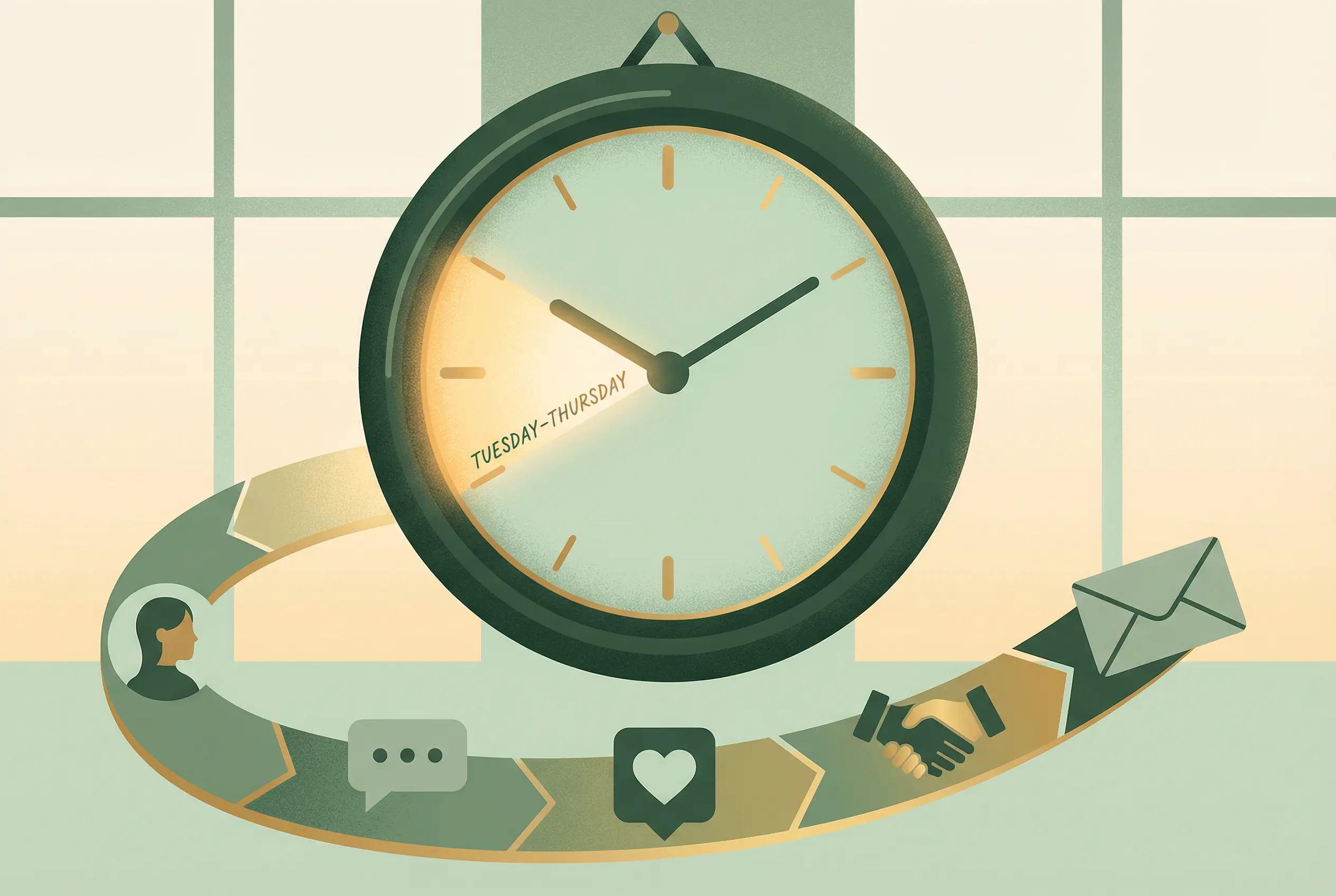
- Best days: Tuesday through Thursday
- Best time: 8-10 AM (recipient's local time)
- Prospect posted in the last 3 months? 45% more likely to respond
- Prospect started a new role within 90 days? 62% more likely to accept InMail
- Message linked to a job change or company news? 32% higher response rate
- Respond to prospect activity within 90 minutes — window closes fast
Step 4: Keep the First Message Short
Initial DMs should stay under 100 words. Single-action messages — asking for one specific thing — achieve 4.88% reply rates. The instinct to explain everything in the first message is wrong. Curiosity opens doors. Pitches close them.
Step 5: Follow Up, But Know When to Stop
80% of successful B2B sales require 5+ follow-ups. Most reps stop after one. (HubSpot) On LinkedIn, the first follow-up has minimal impact, but the second boosts replies by +4%. Optimal spacing: 4-7 days between attempts.
If they haven't responded after three touches? Move on. The relationship isn't dead — their timing is wrong. Keep posting content. They'll come back when they're ready.
The Comment Strategy Nobody Talks About
Here's a channel most salespeople completely miss: strategic commenting.
Not "Great post!" Not the AI-generated affirmation flooding feeds right now. Genuine, value-adding comments that build your reputation in front of the right audiences.

| Comment Behavior | Impact |
|---|---|
| 10+ word comments | 2x boost to your own post reach |
| 15+ word comments | 2.5x boost to your own post reach |
| 10-20 comments per day | 50% more profile views, 10% more post engagement |
| AI-generated comments | 5x less response from authors, 7x less from audiences |
| 2nd-degree connection comments | 2.6x more impact than 1st-degree |
Source: Richard van der Blom Algorithm Insights 2025
The Comment-to-DM Pipeline
- Find 10-15 target accounts you're trying to reach
- Follow their key people — founders, decision-makers, procurement leads
- For 2-3 weeks, comment meaningfully on their posts: add data, ask a real question, build on their point
- After 4-5 genuine interactions, reach out via DM referencing your conversations
- Response rates on this follow-up: 30%+
Key Takeaway: LinkedIn polls are not anonymous. Every person who votes is visible to you. A well-crafted poll about a pain point your ideal buyer has is effectively a qualified lead list. Every vote is a micro-commitment. Follow up with context.
Key Takeaway: LinkedIn polls are not anonymous. Every person who votes is visible to you. A well-crafted poll about a pain point your ideal buyer has is effectively a qualified lead list. Every vote is a micro-commitment. Follow up with context.
What Kills Deals: The Pitch Slap Problem
Let's name the behavior that's destroying LinkedIn's usefulness as a sales channel.
From Andy Crestodina's 2025 Spam Report, buyers describe their experience:
"Connect today, get a pitch in 120 seconds. This crowd treats LinkedIn like a cold-calling machine." — Prerna Mehta
"Connect today, get a pitch in 120 seconds. This crowd treats LinkedIn like a cold-calling machine." — Prerna Mehta
"I've started treating my LinkedIn DMs like a spam folder. The real cost of this automation spam isn't annoyance. It's the death of real networking." — Stephen Tseng
"I've started treating my LinkedIn DMs like a spam folder. The real cost of this automation spam isn't annoyance. It's the death of real networking." — Stephen Tseng
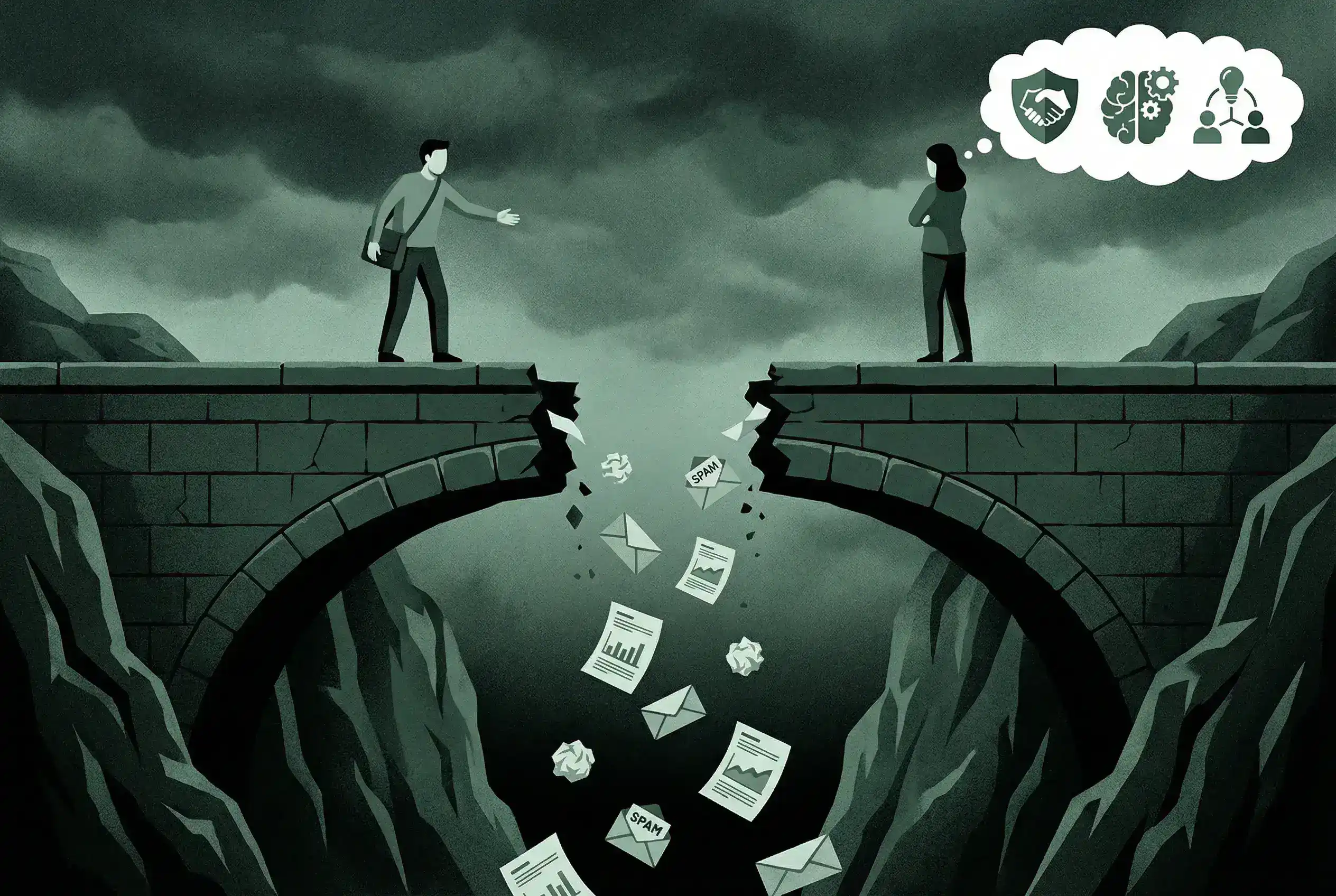
LinkedIn reports only 45% of buyers trust sellers at all. You're not starting from zero. You're starting from a deficit.
What do buyers actually value in sellers? From LinkedIn's Deep Sales Playbook (508 buyers surveyed):
- Trustworthiness — 44%
- Transparency — 40%
- Understanding of the industry — 36%
- Charisma — dead last
The "charming salesperson" archetype that closes deals on personality is a myth that data has thoroughly killed. What buyers want is competence, honesty, and the sense that you understand their world. None of that comes from a pitch. All of it can come from content.
SSI: Useful Tool or Vanity Metric?
The LinkedIn Social Selling Index (SSI) is a score from 0-100 built on four pillars: establishing your professional brand, finding the right people, engaging with insights, and building relationships. Check yours at linkedin.com/sales/ssi.
LinkedIn's data on SSI and performance:
- Social selling leaders create 45% more sales opportunities
- They are 51% more likely to reach quota
- 78% of social sellers outsell peers who don't use social media
- High-SSI professionals receive promotions 17 months faster on average
SSI matters — with important nuance. It tracks behaviors correlated with selling success, not success itself. A high score from engaging in irrelevant conversations or connecting with unqualified leads is worthless.
Use SSI as a diagnostic, not a target. If your score is low on "Finding the right people" — you're probably not prospecting with enough precision. If it's low on "Building relationships" — you're broadcasting instead of connecting. The four components are a map of your selling behavior. Follow where it points.
Sales Navigator: Worth the Investment?
A Forrester Total Economic Impact study found Sales Navigator delivered:
| Metric | Result |
|---|---|
| 3-Year ROI | 312% |
| Total Benefits | $6.25 million (from $1.5M investment) |
| Payback Period | Under 6 months |
| Win Rate Improvement | 42% higher |
Who Should Invest
Invest in Sales Navigator if:
- Your deal sizes mean even 1-2 additional closed deals per quarter cover the cost
- You're selling into enterprise accounts with multi-stakeholder buying committees (average: 11-13 people)
- Your sales cycle is 30+ days and requires stakeholder mapping
- Your team will actually use it consistently
Don't invest if:
- You have fewer than 50 target accounts (free LinkedIn + manual research may be enough)
- You're a solo operator at an early stage
- Your team won't adopt it — low utilization is the #1 ROI killer
The 7 Mistakes That Kill LinkedIn Sales
1. Pitching Within 120 Seconds of Connecting
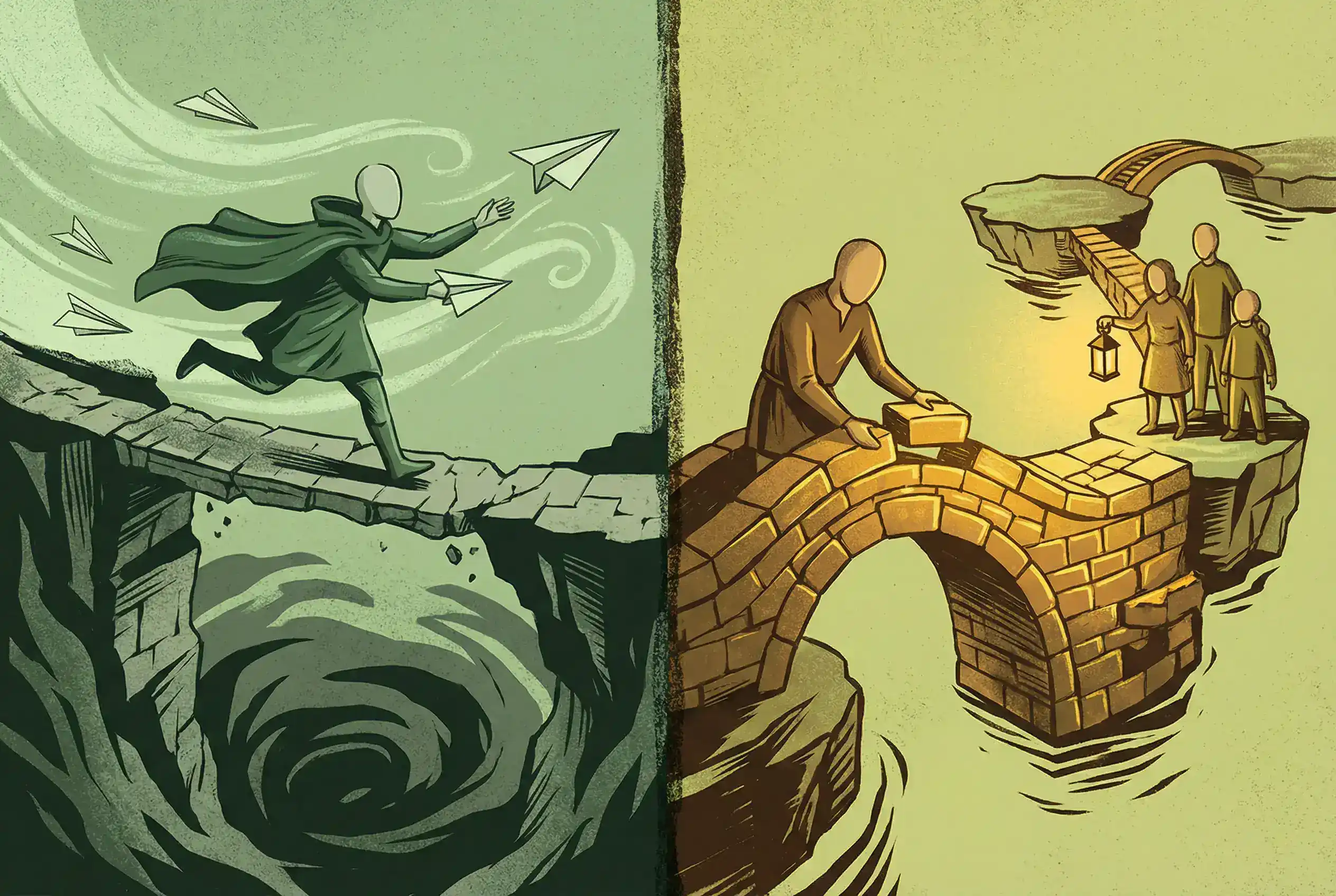
The fastest way to guarantee no meeting. Build familiarity first — even a week of following their content is better than nothing.
2. Treating InMail Like Cold Email
Daniel Disney ran the experiment. 500 cold InMails = 0 meetings. InMail alone, without relationship context, is advertising with bad margins.
3. Automating Before You've Found What Works
Automation should scale a process that's already converting. Automating a failed process just produces faster failure.
4. Ignoring Your Profile
82% of buyers check it before taking a meeting. A dormant profile with content from six months ago fails the background check. Fix your profile first.
5. Skipping the Follow-Up
80% of sales require 5+ touches. Most reps quit after one. The first follow-up barely moves the needle — the second one does. Space them 4-7 days apart.
6. Using AI Comments
AI comments receive 5x less response from authors and 7x less from audiences. They're recognizable. They damage your reputation one generic affirmation at a time.
7. Confusing Activity for Strategy
High connection count, high post frequency, high SSI — none of it means pipeline if you're reaching the wrong people. Relevance beats volume. Understanding the LinkedIn algorithm helps you reach the right audience.
The Uncomfortable Truth
All of this takes time. That's the part the LinkedIn gurus skip.
The 95-5 rule from LinkedIn's B2B Institute: at any given moment, only 5% of your target market is actively looking to buy. The other 95% are out-of-market — but they will buy eventually. The question is whether they'll think of you when they do.
For enterprise deals with buying committees of 11-13 people, that window might be 12-18 months away.
The Honest Timeline
| Phase | What Happens |
|---|---|
| Month 1-2 | Building habits. Minimal visible results. |
| Month 3 | First signs of traction. Profile views increasing. |
| Month 4-6 | Inbound signals start appearing. Prospects mention your content. |
| Month 6-12 | Pipeline from LinkedIn becomes measurable and reliable. |
Content compounds. Relationships compound. Trust compounds. But none of it is instant.
Deep sellers — the 18% of salespeople who build relationships and use intelligence rather than volume — are 2x more likely to exceed quota. But they're only 18% because the other 82% won't commit to the timeline.
Build LinkedIn Pipeline — Without the Daily Grind
If you're running a LinkedIn sales motion and trying to do it consistently — generating content, tracking what resonates, and understanding which messages and formats work — Co.Actor was built for exactly this.
It learns how YOU write. Not generic AI — your actual tone, phrases, and perspective. 5-10 post ideas every morning. Perfect for individual creators and employee advocacy programs. Users see 3x engagement increase in month one.
No credit card required. Full access to all features.
Your Action Items This Week
- Audit your profile — 82% of buyers check it before agreeing to a meeting. Is it doing sales work? Does it speak to your buyer's problems, or to your own resume?
- Find 10-15 target accounts and follow the key decision-makers. Engage with their content genuinely for two weeks before sending a single message.
- Post one carousel this week — an educational framework, a data breakdown, or a case study relevant to your buyer's world. Track engagement for 5 days.
- Check your SSI score at linkedin.com/sales/ssi. Look at "Finding the right people" and "Building relationships" — the components most correlated with actual pipeline.
- Kill one automated sequence. Replace it with 10 manually personalized messages. Compare response rates after two weeks.
Frequently Asked Questions
What is the average response rate for LinkedIn outreach?
Automated LinkedIn messages achieve about 0.47% response rates. Personalized, hand-crafted outreach achieves around 8%. Pre-engagement — commenting on prospects' posts for 2-3 weeks before reaching out — can push follow-up DM response rates above 30%.
Is LinkedIn Sales Navigator worth the investment?
According to a Forrester study, Sales Navigator delivers 312% ROI over three years with a payback period under 6 months. It's worth it if your deal sizes justify the $80-150/month cost and your team will use it consistently. For solo operators with fewer than 50 target accounts, free LinkedIn may be sufficient.
What is the LinkedIn Social Selling Index (SSI)?
SSI is a 0-100 score measuring four pillars: establishing your professional brand, finding the right people, engaging with insights, and building relationships. Social selling leaders create 45% more opportunities and are 51% more likely to reach quota. Check yours at linkedin.com/sales/ssi.
Should I include a note with LinkedIn connection requests?
Data from 80,000+ requests shows no note gets 55-68% acceptance rate, while hyper-personalized notes get 45-60%. However, personalized messages lead to 72% higher reply rates after connection. For high-value targets, invest in the note.
How long does it take to build a LinkedIn sales pipeline?
Months 1-2 are habit building with minimal visible results. Month 3 brings first traction. Months 4-6 show inbound signals. Months 6-12 deliver measurable, reliable pipeline. The 95-5 rule means only 5% of your market is actively buying at any time — consistency captures the rest.
What content format works best for LinkedIn sales?
Carousels drive approximately 24% engagement vs 4% for text posts. Educational formats — frameworks, guides, data breakdowns — build the most pipeline. Video reach dropped significantly in late 2025, making carousels and documents the highest-ROI formats.
How many follow-ups should I send on LinkedIn?
80% of successful B2B sales require 5+ follow-ups, but on LinkedIn specifically, 1-2 thoughtful follow-ups is optimal. Space them 4-7 days apart. After three touches with no response, move on and keep posting content.
Do AI-generated comments work on LinkedIn?
No. AI comments receive 5x less response from post authors and 7x less from audiences. Comments of 15+ words boost your reach by 2.5x, but they must be authentic and add real value.
Sources & References
- LinkedIn Deep Sales Playbook (with Ipsos) — 2,000+ B2B sellers and 508 buyers surveyed
- Edelman-LinkedIn 2024 B2B Thought Leadership Impact Study — 3,484 global business executives
- 6sense 2024 B2B Buyer Experience Report — Buying committee behavior
- Richard van der Blom Algorithm Insights 2025 — 1.8M posts analyzed
- ReactIn Connection Request Study 2024-2025 — 80,000+ requests analyzed
- Andy Crestodina / Orbit Media 2025 LinkedIn Spam Report
- Forrester Total Economic Impact: Sales Navigator — 312% ROI
- HubSpot Sales Statistics 2024 — Follow-up frequency data
- LinkedIn B2B Institute — 95-5 Rule
Written by
