TL;DR
- Your personal brand is not your job title — it's the thing people associate with your name when you're not in the room
- Pick 3-5 content pillars, max — and repeat them until you're sick of yourself. That's when people start remembering you.
- 91% of top LinkedIn creators post at least every 3 days — below that frequency, the algorithm forgets you and so does your audience
- Vulnerability works — but only with a business lesson attached — "I failed" without "here's what I learned" is therapy, not branding
- 73% of B2B decision-makers trust thought leadership more than marketing materials — your content IS your credibility
- It takes 3-6 months to build recognition — there are no shortcuts, and anyone selling you one is lying
What a LinkedIn Personal Brand Actually Is (And Isn't)
Let's kill the buzzword first.
A personal brand is not a color palette. It's not a banner image. It's not a catchy headline or a content calendar.
It's this: what people say about you when you're not in the room.
"Personal branding in 2025 is shifting in a big way. It's no longer about how many people follow you. It's about how deeply they connect with you."—Chris Ducker
"In an AI-driven world, human trust is everything. Your story is your competitive edge. Your personal brand is your moat."—Hanna Larsson
The strongest brands on LinkedIn aren't built on viral moments. They're built on repetition — showing up with the same perspective, the same expertise, the same voice, until people can predict what you'd say about a topic before you say it.
Key Takeaway: The goal is not fame. It's predictability in your expertise. When people can anticipate your perspective on a topic — that's a brand.
Why Personal Brand Beats Company Page (The Data)
If you're still wondering whether to invest time in your personal profile or your company page, the numbers make this easy:
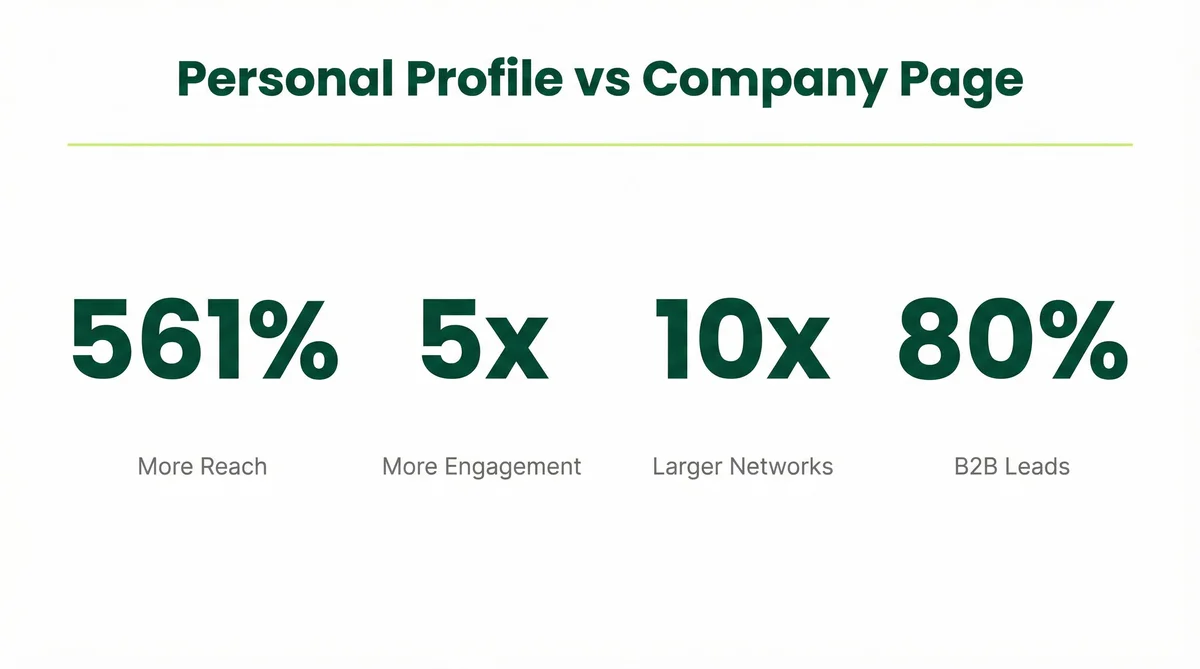
| Metric | Personal Profile | Company Page | Source |
|---|---|---|---|
| Organic Reach | 561% more | Baseline | Ordinal |
| Engagement Rate | 5x higher | Baseline | Refine Labs |
| Network Size | 10x larger | Baseline | LiGo Social |
| B2B Leads | 80% of leads | 20% of leads | Edelman 2025 |
53% of B2B decision-makers say if a company's thought leadership is strong, brand recognition doesn't even matter. (Edelman 2025) More than half of buyers will choose a company they've barely heard of — if the people behind it produce content that demonstrates real expertise.
Your company page is your storefront. Your personal brand is the person standing at the door, shaking hands, having actual conversations. People buy from people. This is why social selling LinkedIn strategies and LinkedIn thought leadership at the individual level consistently outperform corporate content.
Finding Your LinkedIn Niche of One
"Just pick a niche" is advice that sounds simple until you try it.
The problem: you're good at multiple things. You serve different audiences. Narrowing feels like leaving money on the table.
Here's what the data says: LinkedIn's algorithm uses topical authority to determine who sees your content. If you post about sales strategy on Monday, leadership on Wednesday, and fitness on Friday — the algorithm doesn't know who to show your content to. Your reach fractures across unrelated audiences.
But if you post consistently about one domain, LinkedIn identifies you as an expert and prioritizes your content for the right professional cohort. The algorithm does the targeting for you — but only if you give it a clear signal.
Justin Welsh's Sub-Niching Framework
Sub-niche by audience:
- Athletes → Runners → Marathon runners → Marathon runners over 40
Sub-niche by product/service:
- Cookbook → Vegan → Desserts → 15-minute vegan desserts
His rule: combine a specific skill with a specific audience. "Copywriting" is too broad. "Copywriting for pre-seed SaaS startups" — now nobody else is in that exact room.
How This Played Out in Practice
Justin Welsh
One-person businesses for burned-out professionals → $10M+ business
Sam Browne
LinkedIn growth for founders only → 500 to 100K followers in 2 years
Lara Acosta
Personal branding for ambitious professionals → #1 female UK LinkedIn creator in 3 years
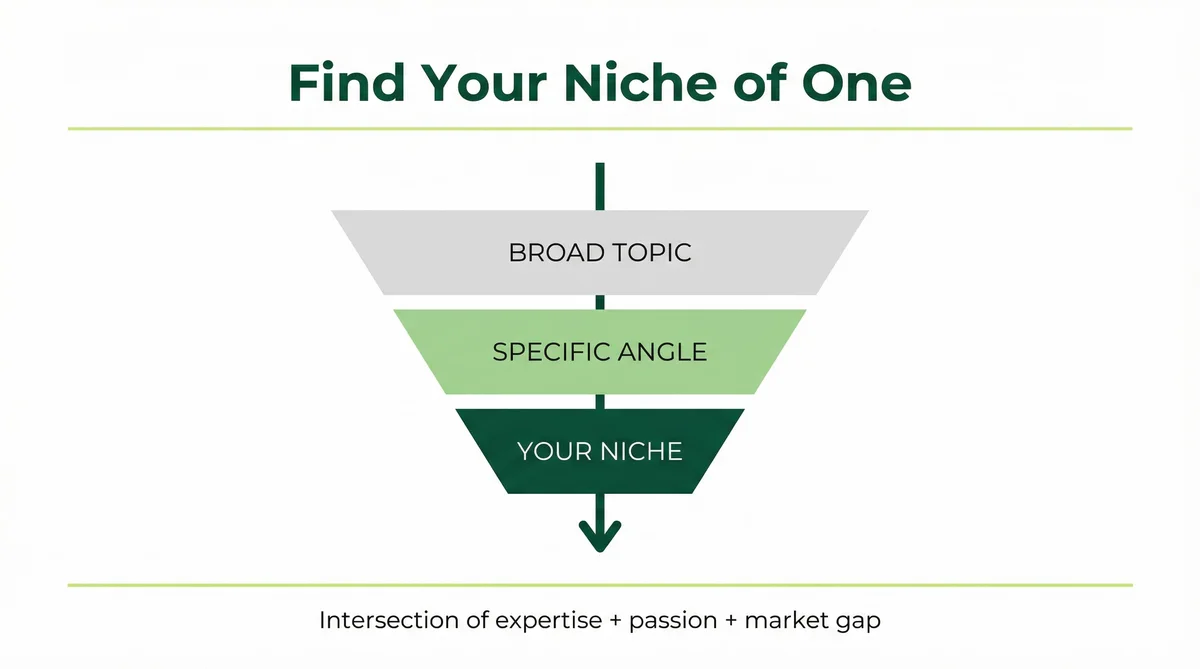
The pattern: the more specific the niche, the faster the growth. Counterintuitive but consistent.
Find Your Niche
- What topic could you talk about for 30 minutes without notes?
- What do people already ask your opinion on?
- Where does your experience give you an unfair advantage?
The intersection of those three answers is your niche. If you're not sure yet — start posting. Your niche finds you through the content that resonates.
Content Pillars: 3-5 Themes on Repeat
Once you know your niche, you need content pillars — the 3-5 recurring themes that form the backbone of your LinkedIn content strategy. You can manage them with Co.Actor and talk about them repeatedly.
Justin Welsh recommends 2-5 content themes, emphasizing: "Repetition is very important because you want your name to be associated with that particular domain."
TheSLAY Framework(Lara Acosta)
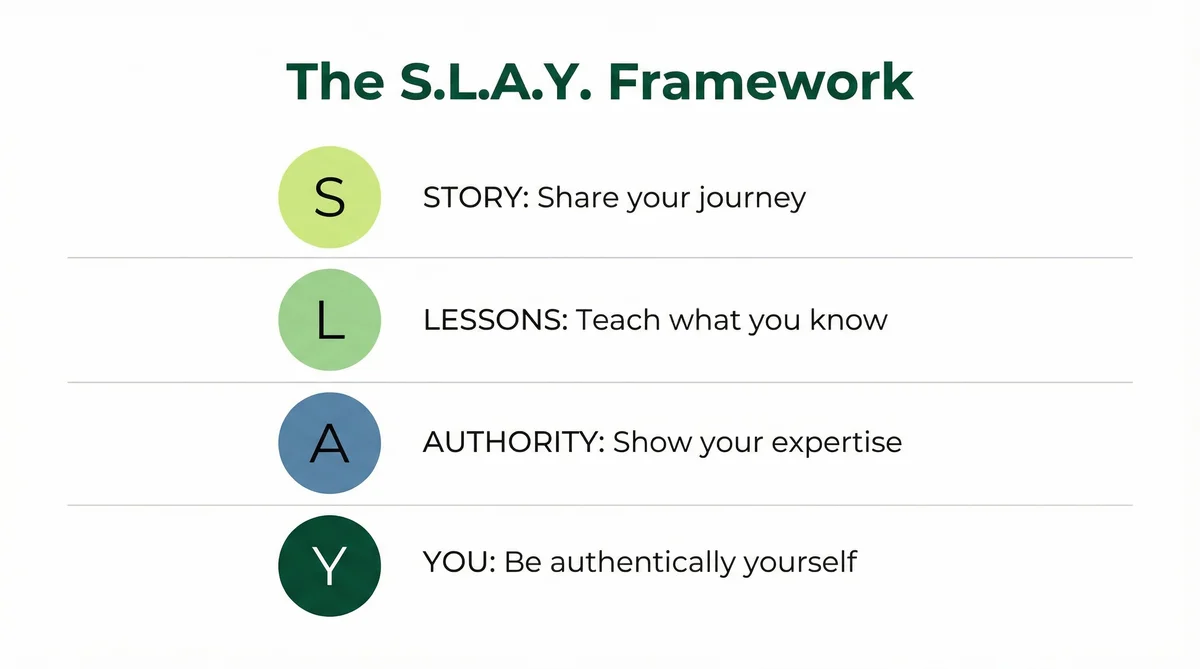
- S = Story (makes you relatable): "The pitch that bombed and what I changed"
- L = Lesson (shows your thinking): "Why most cold outreach fails at the first line"
- A = Actionable Advice (proves your expertise): "My 3-step framework for LinkedIn DMs"
- Y = You (drives engagement): "What's the worst cold pitch you've ever received?"
Content Type Performance
Richard van der Blom's 2025 report (1.8M posts analyzed):
| Content Type | Best For | Impact |
|---|---|---|
| Personal storytelling | Connection & relatability | +21% |
| Educational / How-to | Authority building | +8% |
| Thought leadership | Positioning & trust | Deepest trust |
| Achievements | Social proof | Moderate |
| Conversion / offers | Business | Weakest |
The Mix That Works
60% value (teach/frameworks), 25% proof (wins/case studies), 15% engagement (opinions/questions).
1 Idea Into 7 Posts
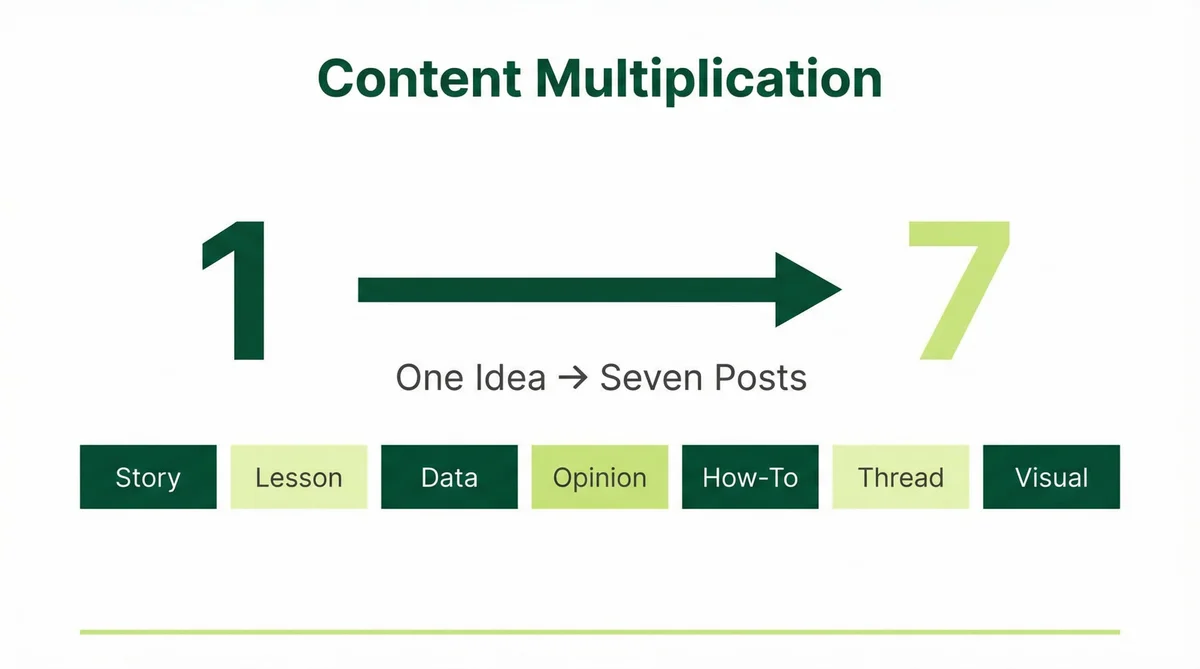
Start with one pillar idea. Turn it into seven posts:
- A story
- A listicle
- A teardown
- An observation
- A contrarian take
- Past vs. present
- Future prediction
One idea, seven angles. Multiply by your 3-5 pillars. You'll never run out of content.
Two format notes the data screams at you: 88% of top-performing posts had zero hashtags. And vertical images outperform horizontal by 10-40% — because 75% of LinkedIn users are on mobile.
LinkedIn Consistency = Recognition (The Timeline Nobody Talks About)
Here's where most people quit.
The LinkedIn algorithm 2026 rewards consistency more than ever. A Copyblogger study of 100 LinkedIn influencers (each averaging 40+ comments per post) found:
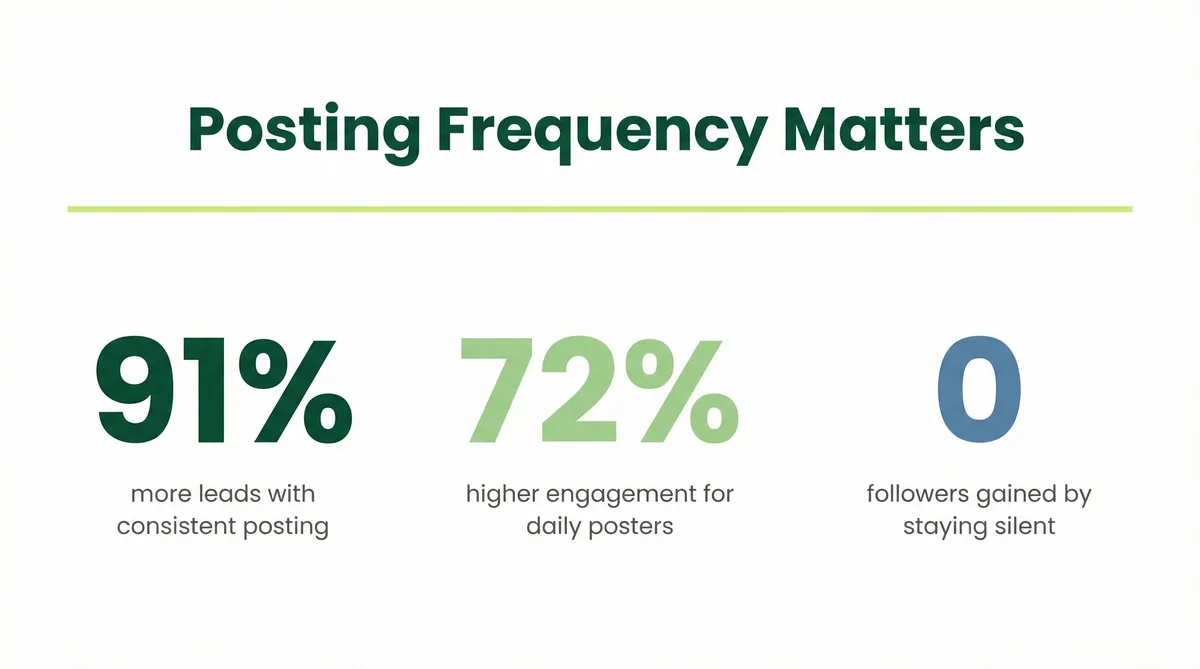
Zero exceptions. Every top creator maintained minimum frequency. The algorithm has a short memory — and so does your audience.
Richard van der Blom's data backs this up: 2-3 posts per week is the sweet spot. Avoid posting back-to-back in the same format — it suppresses performance by up to 20%.
The Recognition Timeline
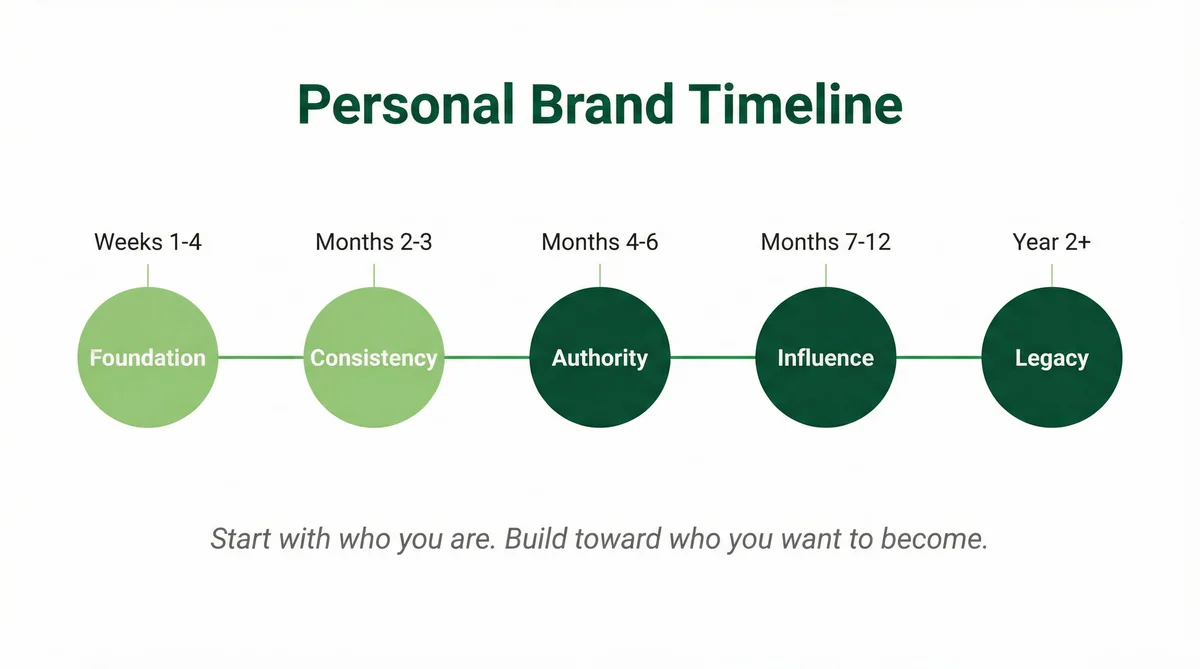
| Phase | What Happens |
|---|---|
| Weeks 1-4 | Posting into the void. Single-digit likes. 80% of people quit here. |
| Months 2-3 | Content starts resonating. A post hits 1K impressions. "I keep seeing your stuff." |
| Months 4-6 | Recognized at events. "Oh, you're the person who writes about [topic]." |
| Months 6-12 | People introduce you as the expert. Inbound opportunities. You've arrived. |
| Year 1-2 | Established brand with measurable business impact. |
There are no 30-day shortcuts. Anyone selling you one is selling you something else.
Why Repetition Works
The top 3 performing posts for any given creator were very similar in format and style. Not diverse. Not experimental. Same voice, same structure, same type of insight.
Your audience gravitates toward a particular style. When you change it up, you confuse them. When you repeat it, you become recognizable. The feed is chaos — consistency is how you cut through it.
Storytelling Without Cringe
Personal stories on LinkedIn are a minefield. Done right, they build deep connection. Done wrong, they make people mute you.
| Story Type | Engagement Rate |
|---|---|
| Career journey / lessons learned | 20-35% |
| Contrarian takes / hot takes | 25-40% |
| Quick tips / how-tos | 12-20% |
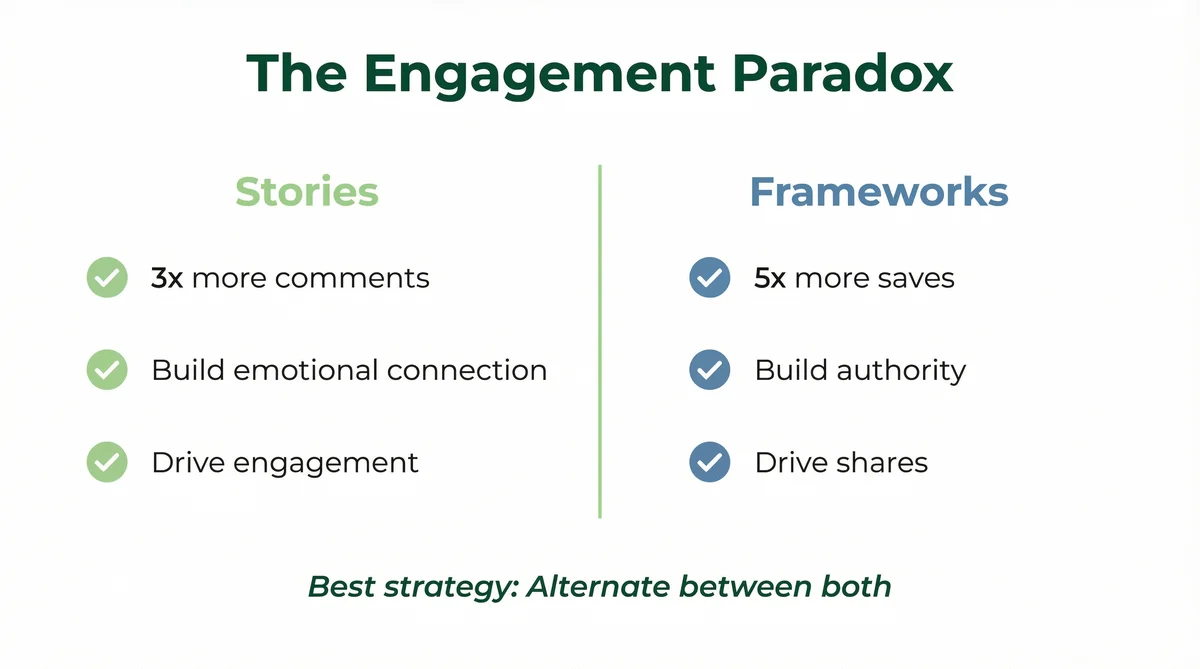
The engagement paradox: personal stories get high likes but fewer saves — people appreciate the authenticity but don't bookmark it. Frameworks get modest likes but high saves — people find them useful but don't feel compelled to react emotionally.
Stories make people like you. Frameworks make people need you. A strong brand needs both.
Vulnerability must always serve a professional insight. "I got fired" is not a LinkedIn post. "I got fired and here's what it taught me about managing up" — that's a post.
Origin Story Structure That Works
- Vulnerable hook — open with a raw admission
- The moment — what happened, specific, not vague
- The pivot — what you changed and why
- The lesson — the principle that applies to your audience
- The question — invite others to share their version
Contrarian Takes — Handle with Care
Hot takes are the highest-engagement format on LinkedIn. They also build the strongest brands — because having a clear position makes you memorable.
"You don't need an enemy every day of your life."—Jasmin Alic
Good: "Cold calling isn't dead — here's my data from 500 calls this quarter."
Bad: "Everyone who uses LinkedIn polls is an idiot."
One builds authority. The other burns bridges.
Building Personal Branding LinkedIn Credibility From Zero
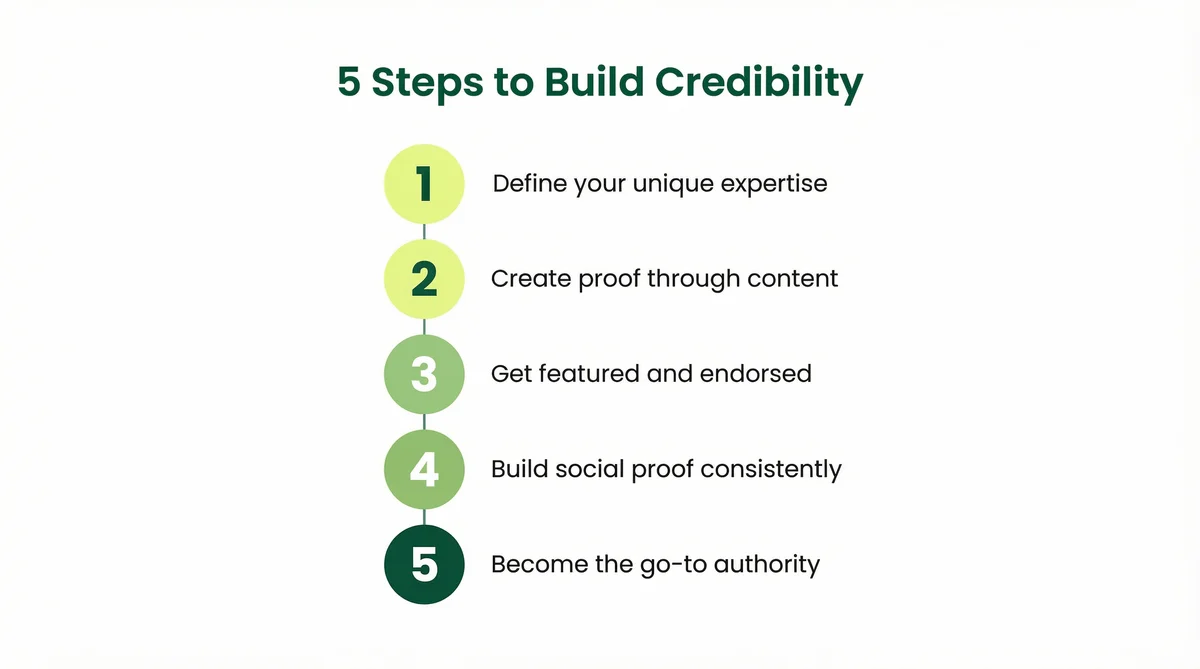
The hardest part: you're starting with nothing. No followers. No track record. No social proof. But the best thought leadership examples on LinkedIn all started exactly here.
Optimize Your Profile as a Landing Page
Banner = the benefit you deliver + proof. Headline = who you help + outcome + credibility marker. Featured = your best 3 proof pieces.
Comment Your Way In
Commenting on a creator's post gives you an 80% chance they'll see your next content. Well-crafted comments get 30-75x more likes than your own posts. Find 5-7 creators in your niche and engage substantively.
Use Credibility Markers
Weak: "I think AI will change marketing." Strong: "In my three years running paid campaigns for SaaS companies, I've watched AI cut our CPA by 34%. Here's what I've learned."
Get theLinkedIn Top Voice Badge
Gold badge: Contribute quality answers to Collaborative Articles. Achievable for consistent participants. Expires every 60 days. Blue badge: Invite-only, ~300 per year.
Extend Beyond the Feed
Podcasts, LinkedIn Lives, collaborations. 81% of podcast listeners take action after hearing host-read content.
LinkedIn Thought Leadership: Credibility by the Numbers
Source: 2024 Edelman-LinkedIn B2B Thought Leadership Impact Report
- 73% of decision-makers trust thought leadership over marketing materials
- 60% started buying after engaging with thought leadership
- 23% would pay a premium for companies demonstrating expertise
The 7 Mistakes Killing Your Brand
"The second you start copying what was true to someone else, you become a clone." — Jasmin Alic. If your posts read like every other creator — same hooks, same frameworks — you have a content calendar, not a brand.
Publishing content and disappearing. Engagement after posting is as important as the post itself. If you only broadcast and never respond, people stop engaging — and the algorithm stops distributing.
"Too many people treat LinkedIn like PR. They show up to drop wins, disappear, then wonder why no one claps." — Jatin Saini. Achievements create distance. Thinking creates connection.
The LinkedIn audience is getting good at sniffing out generic AI output. If your posts could have been written by anyone's ChatGPT, they carry zero brand weight. AI as a tool is fine — AI as your voice is brand suicide.
"If your voice keeps shifting like outfits, don't be surprised when people can't trust you." If you're inspirational on Monday, technical on Wednesday, and comedic on Friday — people don't know what they're following.
"If you just cured cancer and explained how you did it, that content would perform well, regardless of format." — Copyblogger. Obsessing over hooks and carousels while having nothing original to say.
Revenue screenshots. Client count flexes. Income updates. It works once. The tenth time, it's noise — and it attracts people who want your money, not your expertise.
The Uncomfortable Truth
Building a personal brand is slow, repetitive, and unglamorous.
It's showing up on Tuesday morning when nobody liked your last post. It's writing about the same topic for the sixth month in a row while someone else goes viral with a meme. It's watching creators who started after you pass you in follower count.
The ones who build real brands are the ones who keep going anyway. Not because they're more talented. Because they understood from the start that consistency IS the strategy. Not a hack. Not a phase. The whole thing.
Build Your Personal Brand — Without the 45-Minute Daily Grind
Co.Actor learns how YOU write. Not generic AI — your actual tone, phrases, and perspective. 5-10 post ideas every morning. Perfect for individual creators and employee advocacy programs. Users see 3x engagement increase in month one.
No credit card required. Full access to all features.
Your Action Items This Week
- Define your niche in one sentence. "I help [specific audience] with [specific problem] through [your approach]." If you can't fit it in one sentence, it's too broad. Put it in your headline.
- List your 3-5 content pillars. Every post should fall into one bucket. If it doesn't fit — don't post it.
- Audit your last 20 posts. Do they reinforce one consistent theme? If you removed your name, would someone guess they were written by the same person?
- Write one origin story. Vulnerable hook → specific moment → what you changed → the lesson → question. Post it this week.
- Pick 5 creators in your niche. Comment on 2-3 of their posts this week. Real comments that add something. Do this for 4 weeks.
- Apply for the gold Top Voice badge. Contribute 3-5 quality answers to Collaborative Articles in your expertise area.
- Run a Personal Brand Canvas. Answer 9 questions on one page: Why, Values, Skills, Strengths/Weaknesses, Goals, Audience, Channels, Tone, Topics. Revisit quarterly.
Frequently Asked Questions
How long does it take to build a personal brand on LinkedIn?
Building a recognizable personal brand takes 3-6 months minimum. In weeks 1-4, you're posting with minimal engagement (80% quit here). By months 2-3, content resonates. Months 4-6, you're recognized as an expert. Full business impact typically takes 1-2 years. Sam Browne took 2 years to reach 100K followers; Justin Welsh took 3 years to build a $10M business.
How often should I post on LinkedIn to build a personal brand?
2-3 posts per week is the sweet spot. A study of 100 LinkedIn influencers found 91% posted at least every 3 days, 72% every 2 days. Zero exceptions. Avoid back-to-back same format posts — suppresses performance by up to 20%.
What should I post about on LinkedIn for personal branding?
Pick 3-5 content pillars and repeat consistently. Optimal mix: 60% value (teach/frameworks), 25% proof (wins/case studies), 15% engagement (opinions/questions). Personal storytelling gets +21% engagement, educational content +8%, and thought leadership builds deepest trust.
Is a personal brand more effective than a company page on LinkedIn?
Significantly. Personal profiles generate 561% more reach, 2.75x more impressions, 5x more engagement. Employee networks are 10x larger than follower lists. 53% of B2B decision-makers say strong thought leadership matters more than brand recognition.
How do I find my LinkedIn niche?
Ask three questions: (1) What topic could you discuss for 30 minutes without notes? (2) What do people already ask your opinion on? (3) Where does your experience create an unfair advantage? The intersection is your niche. Combine a specific skill with a specific audience. Don't wait for perfect positioning — start posting and let content resonance reveal your niche.
Can you build a personal brand on LinkedIn without posting every day?
Yes. Research shows 2-3 posts per week is the optimal frequency. A Copyblogger study of 100 LinkedIn influencers found that 91% posted at least once every 3 days — not daily. Quality and consistency matter more than volume. Tools like Co.Actor help you maintain a steady cadence without spending hours writing.
What is the difference between personal branding and thought leadership on LinkedIn?
Personal branding is how people perceive you — your niche, voice, visual identity, and reputation. Thought leadership is a subset: sharing original insights, frameworks, and expertise that influence your industry. You need personal branding to be recognized; you need thought leadership to be trusted. The strongest LinkedIn profiles combine both.
How do I measure the ROI of my LinkedIn personal brand?
Track these metrics: (1) Profile views and search appearances (awareness), (2) Connection request quality — are decision-makers reaching out? (3) Inbound leads and DM conversations (pipeline), (4) Content engagement rate — aim for 2-5% of impressions, (5) Speaking invitations, podcast appearances, and partnership offers. Most professionals see measurable business impact within 6-12 months of consistent posting.
Should I use AI tools like Co.Actor to write LinkedIn posts?
AI tools are effective when used correctly. The key is using AI that learns your voice — not generic templates. Co.Actor analyzes your writing style, tone, and perspective to generate post ideas that sound like you. Use AI for ideation, drafting, and consistency — but always add your personal experience and opinions. 73% of B2B decision-makers trust thought leadership over marketing materials, so authenticity is non-negotiable.
What are the biggest personal branding mistakes on LinkedIn?
The 7 biggest mistakes: (1) No clear niche — posting about everything means being known for nothing, (2) All take, no give — only self-promoting without providing value, (3) Cloning others — copying viral creators instead of developing your own voice, (4) Ignoring the comment section — where 80% of relationships are built, (5) Inconsistent voice — shifting tone confuses your audience, (6) Optimizing format over substance — obsessing over hooks while having nothing original to say, (7) Commoditizing yourself — revenue screenshots and client count flexes that become noise.
Sources & References
- Ordinal — LinkedIn Company Page Reach
- Refine Labs — Personal vs Company Page
- LiGo Social — LinkedIn Statistics 2025
- Edelman 2025 — B2B Thought Leadership
- Edelman 2024 — B2B Thought Leadership
- Hootsuite — LinkedIn Algorithm 2025
- Botdog — LinkedIn Algorithm Guide
- Justin Welsh — $10M Journey
- Lara Acosta — SLAY Framework
- Copyblogger — LinkedIn Branding Stats
- RedactAI — LinkedIn Post Ideas
- EC-PR — LinkedIn Algorithm Hacks
- Forbes — 7 Laws of LinkedIn
- Louise Brogan — LinkedIn Comment Strategy
- Botdog — LinkedIn Top Voice Badge
- Leaders First — LinkedIn Mistakes
- OMR — Personal Branding Canvas
Written by
